
It’s a phrase that gets used a lot.
“Responsibly sourced.” “Sustainably harvested.” “Eco-friendly.”
And while those ideas matter, they can start to feel a little vague—especially when you’re trying to understand what actually makes one piece of furniture different from another.
At Tomfoolery Wood Co., we try to keep it simpler than that.
For us, responsibly forested wood means knowing where our material comes from, how it was harvested, and why it makes sense to use it in the first place.
Closer to Home, for a Reason
Working out of the Seattle area, we’re surrounded by some of the best hardwood resources in the country.
So whenever possible, we choose to build with domestic, locally harvested species like:
- Walnut
- White oak
- Maple
- Madrone
- Myrtle
Not because they’re trendy—but because they’re practical, beautiful, and responsibly managed.
Using domestic hardwoods means:
- Shorter transportation distances
- Better oversight of forestry practices
- Stronger regional supply chains
It also means we can build furniture that reflects where it was made—not just in craftsmanship, but in material.
What Makes It “Responsible”?
Responsibly forested wood isn’t just about planting trees—it’s about managing forests over time.
In the U.S., hardwood forests are typically:
- Actively managed and regenerated
- Harvested selectively, rather than clear-cut
- Regrown at a rate that meets or exceeds usage
That last point matters.
In many cases, more hardwood is growing in American forests today than is being harvested. That creates a system where using wood—done thoughtfully—is part of maintaining the health of the forest, not depleting it!


Why Not Just Use Exotic Woods?
There’s no denying that imported or “exotic” species can be beautiful.
But they come with tradeoffs:
- Long-distance shipping and higher environmental cost
- Less transparency in how forests are managed
- In some cases, questionable harvesting practices
By comparison, domestic hardwoods offer something different:
- Traceability—we often know the region (and sometimes the mill)
- Consistency—reliable quality and performance
- Accountability—clear forestry standards and regulations
And just as importantly, they allow us to build furniture that feels grounded—connected to a place, not just a style.
Material Matters—But So Does the Maker
The other half of the equation is how that wood is used.
Every piece that comes out of our shop is built by career craftspeople—folks who have spent years (often decades) refining their work. This isn’t assembly-line production. It’s small-scale, hands-on, detail-oriented building.
That combination—responsibly sourced domestic hardwoods + skilled local craftsmanship—is what gives each piece its character.
It’s also what makes it last.
Because sustainability isn’t just about where the wood comes from. It’s about how long the finished piece stays in use.
Not Just Better—Just More Thoughtful
We’re not trying to make grand claims about saving the world through furniture.
But we do believe in making thoughtful choices:
- Using materials that are responsibly harvested
- Keeping our supply chain close to home
- Building pieces that don’t need to be replaced
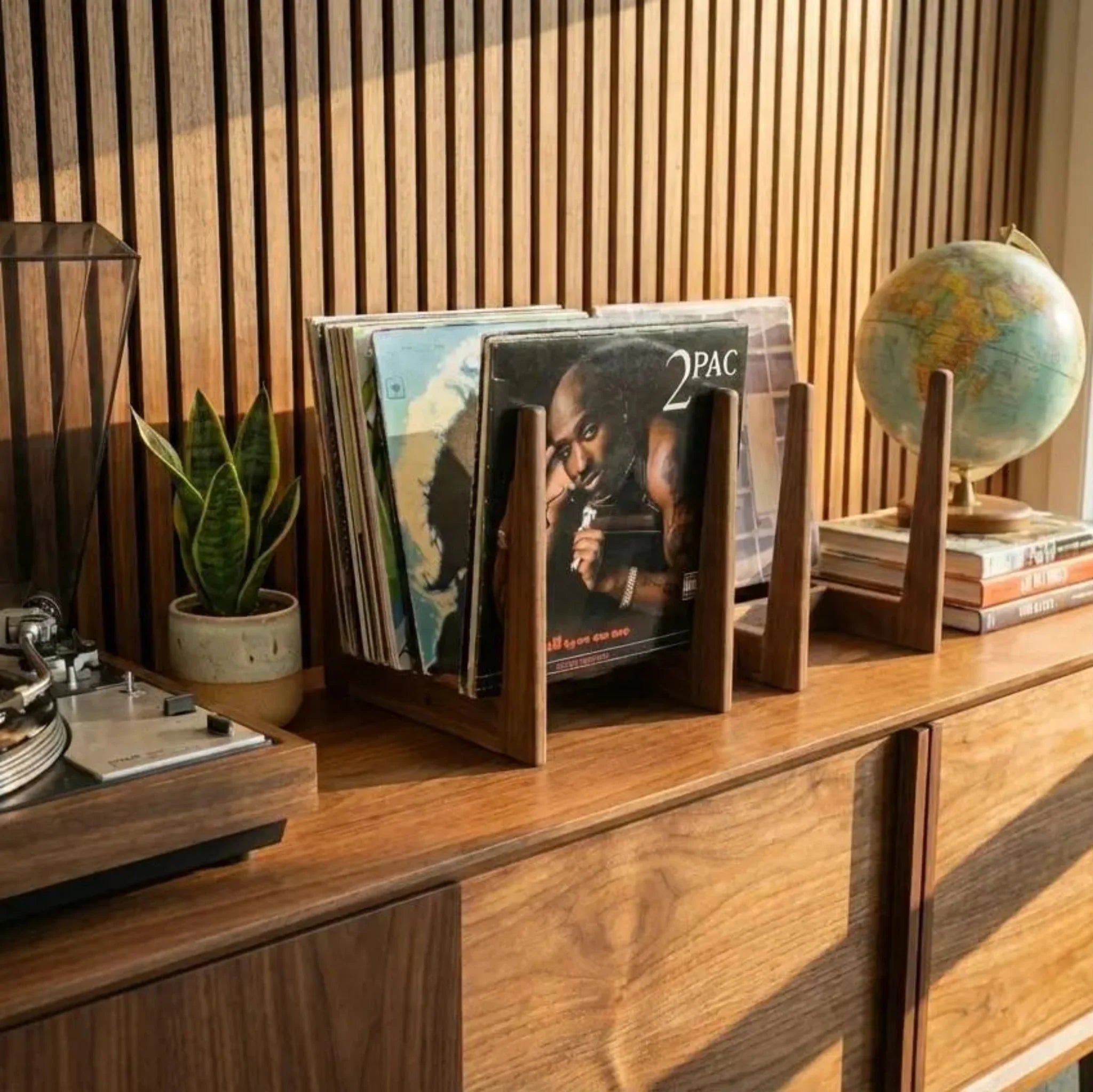
- Attempting to waste as little as possible and/or reusing off-cuts for other purposes, like we did with our popular table-top vinyl stands
When you buy something from Tomfoolery, you’re not just getting a piece of furniture—you’re getting something that reflects:
- The forests it came from
- The people who built it
- And the place it was made
Why It Matters
In the end, responsibly forested wood isn’t about a label.
It’s about a series of decisions—where materials come from, how they’re handled, and what they become.
We choose domestic hardwoods because they make sense for how we build.
We choose to work locally because it keeps quality high and relationships close.
And we build the way we do because we think furniture should feel like it belongs somewhere—and last long enough to prove it.